Cead Mile Failte !

A 'hundred thousand welcomes' to friends of all things Irish, organic, and environmentally friendly. I hope you enjoy my anecdotes and little vignettes. I appreciate comments. If you like it, why not become a follower? Click on Archive and then scroll down to the very bottom for the beginning of our story. Or see: http://Ioncehadafarminireland.blogspot.com/
(©2010)

Monday, March 18, 2013

IE 101: Irish- English for Beginners


As a native German speaker I’m somewhat foolish to write in English. I studied at a German university where BBC English or British Standard English was taught. After that, I spent almost 20 years in Ireland where my accent stuck out like a sore thumb but where I acquired some its lingo. To complicate matters further, I now live in the US. Just having installed a new PC, I was confronted with the question which nuance of the English to make my default language: BE /AE/ AusE/ Polynesian Island E…. (British English, American English, Australian ...)No IE (Irish English), however! I’m also using Dragon Naturally Speaking –a dictation software- and that poor program is utterly confused by my brogue.
Since I write about my previous life in Ireland, I naturally use an Irish English vocabulary – not Irish-Irish (Gaelic), mind you. Two editors of my books and also fellow writers in a creative writing class advised me to drop those Irish expressions that they didn’t understand: Snogging? A tenner? A piggery?
Who do you write for? Who is your audience? My aim is to tell stories in an Irish landscape and if that includes a modicum of Irish vernacular, doesn’t that paint a more colorful and believable picture?
When my American husband and I first met we had a lot of fun over some differences in both versions of the language. I adopted the words “cart, gas, trash can, realtor” instead of “trolley, petrol, wheelie bin and estate agent.” He learned that I wanted to be picked up when I asked him to collect me at 8 p.m. He will call me when I ask to ring me or give me a bell. He understands that I’m not nibbling at his iPad when I take a tablet.
Now to some Irishisms…
“A cuppa” (a cup of tea) is welcome not only for “elevenses” (second breakfast or coffee break mid-morning) and” a pint of the brown stuff” anytime, really if you like Guinness. “Punters” beware ─ too much of it or you get "plastered" or "langers"! Because of Ireland’s cold and damp climate, you will need a "brollie" and a "wooly jumper", maybe even "wellies" if you work on a farm as I did “myself”. We grew "courgettes" on the farm and raised "bonhams" (piglets); briars abounded in the hedgerows. Most Irish farms have "cocks", nothing indecent but a rooster and also "bullocks". Not to be confused with "bollocks": a swear word that is acceptable in polite society, well almost. Expect some "bollocking, slagging , and having to take the mickey", as the Irish sense of humor is different. (Wikipedia or Urbandictionary will enlighten you if I’ve just lost you). Replacing the vowel “u” with an “e” makes a ubiquitous swear word passable, or simply say “effing” or “frigging.”
“Gurriers” and “knackers” I have to explain in my upcoming book: “I once had a Farm in Ireland.” I don’t want to leave my readers too much in the dark; I need to clarify the meaning of an “AGA” and a “JCB”, too.
Spelling differences are easy: tyre, grey, or jewellery─ the spell checker will pick that up if set to AE as default.


In case you travel to Ireland you should know that the Dail is the parliament, a garda is a policeman, and that the Irish say slánte! when toasting - be that with “poteen” (some moonshine booze) or any other drink.
So now for you! Are you with me now? There you have it in a nutshell! Before you get too bored and are “away with the fairies”, let me leave it at this and say slán! Good-bye!


Wednesday, October 17, 2012

Not so Goodies in our Food

In Europe, scientists found out in the 70s that food additives, artificial colorings in particular, are detrimental to children's development. This plus other additional goodies that turn up in our food scared us: pesticides, herbicides, antibiotics, growth promoters; and then there are the preservatives. It also made us think and come to the conclusion that we wanted to produce our own food  and not digest industrial foods anymore that can make you sick.


The soil was polluted, lakes and rivers were, air pollution grew and lead to the big phenomenon of "trees dying" due to acid rain. How could anything healthy grow out of this. Discovering that all these "goodies" were enhancing or rather compromising our food--our stomachs turned and made us think. We decided to grow our own and become self-sufficient. First in the constraints of our house in the the city; well, rather the house of my mother-in-law. After a while, however, she didn't like her shrubs to be replaced any more with strawberries and Brussels sprouts. She wanted her evergreen ground cover back. We had too find our own place; a cottage in the country. A few years later, even that wasn't far away enough to get away from pollution: Chernobyl happened. Taking all of this into account, we opted for a healthier life-style and chose to go to Ireland to make this dream come true.

Now, in Europe and Germany in particular with its stringent environmental laws, food additives have either been  banned or have to be declared on the individual product. "To regulate these additives, and inform consumers, each additive is assigned a unique number, termed as "E numbers", which is used in Europe for all approved additives. Within the EU E numbers are all prefixed by E ". See the full list of what is regulated as a food additive.

In the US, the FDA claims that food dyes are safe, but the experience of some parents and the results of some studies tell a different story. A 2006 study published in the Toxicological Sciences journal showed that exposure to certain dyes during the first few years of life could cause behavioral and developmental disorders in children.

Other countries have already banned or require warning labels for artificially dyed foods. For example, Kellogg’s cereal bars are made using Red 40, Yellow 6 and Blue 1 in the United States, but contain no artificial dyes in the UK. Instead, the same bars are produced there using beetroot, paprika and annatto extract to provide color.

"The problem was first identified in the 1970s. Europe controls and even bans them in foods. The FDA is finally getting around to wondering if they're might be a problem." ADHD comes to mind.

http://www.therealfoodchannel.com/page/20470.html  3min 35 if you want to take the time.
Thanks to Brasscheck that provides invaluable info on many topics.

Saturday, October 13, 2012

Have my green cap on again.

Since I'm about to finish my book on my Irish adventure, I'm wearing my Ex Farmer'sWife's hat more often again as you may have notice. I need a cover artist and some rally cute drawing because the pictures I had in my coffee table version of my book"I once had farm in Ireland" don't translate well into a paperback.
It's been too long and this blog was on the back burner for some time while I've been busy promoting my novel Next time lucky. This will be remedied now and I will give an advance notice soon when it's coming out.
Also appreciate your recommendations on different publishers like Lightning Source of Iunivers. Anybody used them and has some experience to share? I will create  a FB page for the Ex Farmer's Wife.
In the meantime let me recommend my latest find, anew pp that makes life easier for every blogger and more interesting for your readers.It's called glossy, put together in minutes and here's my link to give you an idea how it looks:
http://www.glos.si/siggys-omnibus . I had set up something similar over the few months to give an overview of my various websites. Took e forever. Admittedly, it looks better in y views, but glossy is a quick news round up of all your social networking activities. You tell me. More soon
The Ex Farmer's wife

Wednesday, February 15, 2012

Tomato Ketchup:US and German home-made


What a Ketchup Bottle Tells Us About Life in the U.S.

I've been working on sharpening my observation skills. Today, I took notice of a bottle of ketchup on the table in a restaurant. I was at first attracted to the words, “Plant bottle, 30% made from plastics, 100% recyclable bottle. I had no idea that ketchup had gone green.

The next part that caught my attention was a small square of an abstract drawing. “Ketchup Lovers, Unite! Scan this code or text FRIEND to 5700.” Wow! Marketing is going in some very strange directions these days. Should I care how many people love ketchup? Why? And why would I want them to know that I love ketchup?” 

Which I don't, because the next thing I read were the ingredients. Although written in the same small letters as the other ingredients, my eyes picked out two -- High Fructose Corn Syrup and Corn Syrup (why would ketchup need both, or either?), which my health guru, Dr. Andrew Weil, has been telling me for years NOT to eat for health's sake. I switched long ago to tomato paste when I want a ketchupy taste.

In smaller print at the bottom of the bottle were the words, “from Heinz Seeds.” I hadn't realized that there is such a thing as specific Heinz Seeds. That made me realize how little I know about seeds that our foods are grown from. Guess some company “owns” everything when you look into it.

Lastly, I looked at the bottle itself and realized it was upside down. The lid was on the bottom! No more hitting the bottom of a glass bottle and having it splash all over the plate. How long has ketchup been upside down? Why did it take the company so many years to “improve” how ketchup plopped on a plate?
Hmm!  Instead of a message in a bottle, I found messages on the bottle.

Suellen Zima, a contributor to www.writersgettogether.blogspot.com from the start. 

And now to our home-made version of tomato ketchup.
I made ketchup for a few years out of our own organically grown tomatoes. It does need  some kind of sugar if you want your hopeful off spring even to taste it, never mind like it. I made it without peeling the tomatoes first which resulted in strings of peels in the sauce and bottle. With a disgust in their little faces that I had never seen before they pushed it way. (Only surpassed by the occasional maggot/bug on organic cauliflower on their plates!)
We always had 36 tomatoes plants in our greenhouse which gives a mighty good crop. Normally I would freeze them for later use like many a vegetable. Especially useful for spaghetti sauces. When we emigrated to Ireland, however, we couldn't take the content of our freezers with us. What do you do with dozens of frozen bags of tomatoes? Instead of letting them spoil, I cooked ketchup and bottled it, careful to leave 1/2 inch of olive oil on top in order to preserve it properly. I had over 20 bottles. They made the big move safely--only to be snarled at by the kids.I loved it in spite of seeds and peels and all! Less sweet! Bon appetit!
Regarding the Heinz seeds that's news to me too. Unless you find organic seeds somewhere, Monsanto has a firm monopoly on seeds worldwide squeezing every other producer to the wall and going GM on it. GM is another topic. I wrote about it here and in Germnay/Europe. If you're interested go into archives here and search for GM.

Monday, December 26, 2011

The Second Day of Christmas

For some it's not over.
Germany and many other European countries like France, Italy, Hungary, even the UK have a second Day of Christmas, with 'Boxing Day' being the better known name. In Serbia, Sweden, Croatia and Poland they celebrate it as St. Stephen's Day, the day of the first Christian martyr. In Ireland it's pronounced btw St.Stephense's Day). In the Republic of Ireland, the day is one of nine official public holidays. In Irish, it is called Lá Fhéile Stiofán or Lá an Dreoilín — the latter translates literally as another English name used, the Day of the Wren or Wren's Day. When used in this context, "wren" is often pronounced "ran". This name alludes to several legends, including those found in Ireland, linking episodes in the life of Jesus to the wren. Although now mostly a discontinued tradition, in certain parts of Ireland persons carrying either an effigy of a wren or an actual caged wren (live or dead), travel from house to house playing music, singing and dancing. Depending on which region of the country, they are called Wrenboys.
My son was born that day. I spent Christmas in labor and he was born on Christmas Day, if the second. We moved to Ireland when he was still very small. It was impossible to have a birthday party for the little boy. First of all, the Irish have big families and they all had to visit their relatives on that day. Second, Tipperary where we lived had the customary Wren boys doing the rounds on St.Stephene's day. Originally staging a fake wren shooting, tradition has it that a group of boys and young man dressed up and went from farm to farm singing and collecting goodies- sweets or pennies.
I once tried to give my son  summer birthday celebration in lieu of his real birthday he missed out on every year. Unfortunately, that didn't work out better because on 26 June the summer holidays and with it haymaking and other farmer activities where in full swing.
Everybody whose birthday is close to Christmas can sympathize.

Happy 2nd Day of Christmas!

Tuesday, November 8, 2011

Recipes with Courgettes/Zucchinis


Sorry, I neglected this blog for too long due to my other blogs and book promotion. Now the summer is over and everything I had planned to tell you about courgettes is out of seasonal synch. Let me sum it up in brief: Our 50 yards of zucchinis as they are called in Ireland, produced such a fine crop, abundance squared that I resorted to making zucchini relish (yum!) and sold it in jam jars in the local shops and on the farmers' market. They don't freeze very well but marinate wonderfully after grilling like bell peppers or eggplants in olive oil and vinegar, preferably balsamico. Just a dash of salt and pepper, store in a nice ceramic jar; they keep for weeks in the fridge--if you can stay away from them. I always used the small ones for this. Big zucchinis can best be turned into relish.
Have you tried zucchini fritters? Grate them like when making relish, add grated onions, a little salt and flour to bind and make fritters. Here in the US, they would be called patties. Flat like burgers. Fried in oil, the result is like Swiss Rosti. To make them totally delicious you can put a big slice of tomato on top plus grated cheese and put them under the grill until the cheese is nicely melted.
In the first years of growing zucchinis, I got totally excited when they became as big as a man's arm. Only to find out that they get mushy inside and you have to remove their big seeds. And their skin gets leathery tough. I never dried the seeds. Like pumpkin seeds, I suppose, one could have made use of them this way as well. Too much work!
But if the zucchini is not too big, let's say up to a foot long, cut them into halves, scrape out the seeds and fill with ground beef & onions (like filled bell peppers), sprinkle with grated cheese and bake in the oven until meat is cooked and cheese melted. My children called them zucchini boats.
St. Martin's day is approaching which was the death sentence for our first goose of the year.But that story has already been told. You'll find it by going into my archive and look for geese.

Sunday, September 25, 2011

The traditional matchmaking festival for farmers

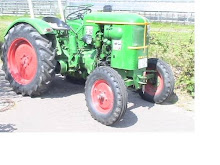
With the days of summer ending, Irish farmers will have brought in their main crop. My trusted housekeeper one year while I was still married to my farmer told me about a tradition that is kept to this day in the farming community around this time of year. A bachelor farmer would ride on his tractor to the big matchmaking festival of the year in Lisdoonvarna...and come home with a bride next to him. Lacking other opportunities in the olden days, it oftentimes was a great outlet for merrymaking for rural folks who lived rather isolated and even to find a spouse. Clare's tourist website calls it the holy grail of romance and lonely souls.
After separating from Mac as I call him here and opening my marriage bureau I had to go and see for myself if this was true and how it worked. A nice weekend out in Co. Clare, the West of Ireland anyways and I needed to do research being in the business myself.
The festival takes place for almost 4 weeks from September to October. I went with one of my employees to check out the local scene and also met with the big name in the business, Bill Daly. He was THE matchmaker of some renown who claimed to be responsible for thousands of marriages. As the new kid on the block who was making an all year round professional business out of matchmaking, he didn't take me seriously. That year he was officially introducing his daughter as his successor-- but only for the time of the festival. No advanced dating service all over the country like mine was planned. They were merely upholding tradition.
People come from all over Ireland, Northern Ireland voices and American accents were also heard. The whole town was involved, mostly in the pubs, drinking and flirting. We attended the biggest event of them all: the election of the Bachelor of the year. After a few rounds of questions the candidates were asked to sing a song of their choice and show off their dancing skills with the lasses. After half an hour of suspended animation the room was presented with the winner. I forget his name, it's irrelevant. But what sticks in my memory is that he was found out to be a married man pulling out his ring and drawing his wife onto the dance floor, giving her a big smacker of a kiss. Nobody but my staffer and I was really outraged. Nobody but us had taken this charade seriously.A Brigadon gone terribly wrong,but the craig is mighty. You might still go for the horse racing and carousing. And the Irish are famous for having fun!

Wednesday, August 3, 2011

Le Ferme de Paris

My home swap adventure took me to the outskirts of Paris. Nice home if a little neglected. My old farming skills come in handy. It was part of the deal to water plants. Normally easy, except most are half-dead from lack of irrigation, tomatoes and aubergines as well, however, are doing well. At the last minute, I also got the request to look after a pet rabbit and guinea pig. Cute little critters. I promise I won't set them free as I did our own bunny rabbit on the farm years ago. (see old post about Benny Bunny).
Trying to find trendy things to do in Paris, I stumbled across a few things that relate to this green blog quite unexpectedly. An article in Delta's Sky magazine recommends walking tours that start at Merciand Bonton on the Blvd. Beaumarchais."These two concept stores and restaurant will get you kitted out in the latest urban-farmer aesthetic, with profits all going to charitable causes."
And I was pleased to read about a 5-hectares working organic farm, the Ferme de Paris, allows young city dwellers to explore country life through the seasons with its meadow, stables and farmyard. You go Paris! Even I won't go there myself.

Thursday, July 28, 2011

Grooming Sheep

Well, you may have thought that chapter was tackled and done with! Not so. Besides the shearing and dipping, farmers have to trim their hooves and regularly. Otherwise they can catch some nasty foot and claw disease or lameness. Some people find it hard to do their own toe nailhttp://www.blogger.com/img/blank.gifs. It takes two people: one to hold the sheep that may weigh about 50 pounds already and the other one is wielding the clippers. I always volunteer.
http://www.blogger.com/img/blank
.gifed for the holding part, although it is a struggle as they don’t want to cooperate. So I had to hold on with my full body weight to prevent them from shirking away from Mac’s hands. As stupid as they often appear otherwise, these sheep are quite crafty at this. Lo and behold if a nail is cut to short or the animal is slightly cut, there is no continuing till another day. And then try to find that same sheep out of a herd of a hundred. If you're interested to learn more about the subject: Hoof trimming: A Day in the Life of a Farmer
When dosing them, it’s customary to mark their pelts with a colored marker in order to know which of them got their dosage already. I’m talking of Flagyl that cures the nasty fly infestation once they have occurred. The afflicted pelt also has to be brushed with some liquid generously if flies are visible and have laid eggs. If they develop into maggots, sheep often die. In this endeavor, I also opted for the struggling and holding part. I just stomach to push a big pill down a sheep’s throat which, inadvertently, it would try to regurgitate. So you want a firm hand to keep their mouths shut until they have swallowed it. Some are able to fool you. They seem to keep the pill in their cheeks until you think you‘re safe and can let go. That’s when they spit it out. Having mastered this, you give them a marking stroke with a different color.
Not every sheep makes it. I drove dead sheep –and calves for that matter- to the lab when a death had occurred. In family jeep; in the back which was carpet- lined, remember? It was a trip of about 20 miles. The stench became unbearable after five minutes. So I rolled down the windows. Then it as too cold in the car and I put the heat on. That didn’t help the aroma; mostly it rained in. I wasn’t really cut for farming. But who else would have done that errand? The lab would determine the reason why an animal died when it wasn’t obvious otherwise to the farmer.