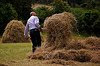
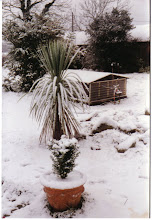
In late spring and early summer it's high time to get your sheep shorn.I'm afraid this year I left it almost too late! But then again, Klkenny still had a touch of snow last week; in June!
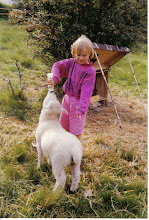
At first, the sheep don't seem to be too hot or look like they need a haircut but with the arrival of flies the thick winter fleece becomes a danger to the animals. Maggots easily infest a flock of sheep and that's trouble no farmer wants to deal with. We had a neighbor who offered his services. Mick always did his own and had experience. Shearing was done outside on the yard. The sheep have to be rounded up by an able dog first. Our Brandy had talent for this job. She clearly enjoyed nipping the sheep in their legs too while rounding them up and circling them all the time to keep them in check. Where she had learned it--we didn't know. It was in her blood, whereas later off spring of hers was useless.
The shearer holds a sheep between his legs while a second is needed to keep the struggling sheep still. Mostly they are not very cooperative in spite of the sense of relief afterwards.Zip, zip, zip and off flies the wool. To get the fleece in one piece is impossible. They must come from slaughtered sheep. In the olden days it was worth to collect the wool but at that time we were in the "business", prices were too low to bother. We still had to pick up the wool and stuff them into bags because the dogs would make a right mess and have way too much fun with it. Fertilizer bags are the bags of choice like for many other jobs, collecting windfall apples, even for sleighing down a hill which merely has a sprinkle of snow.
It's a smelly job. Sheep have a certain odor, their lanolin imbued wool does too and so do the men at work after a while. On a hot day, it can be quite overwhelming for the delicate nose of a city girl. After a while and typical hints from the shearers, drink is fetched. This type of work makes you hungry as well.
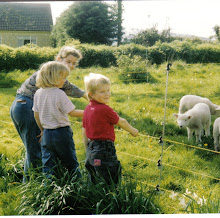
In the following years, when we had about 100 sheep we needed professional help if this social outing wasn't going to take all week.
I always felt sorry for the sheep afterwards when the weather was still on the chilly side. They looked like starved skeletons, naked and unappealing. But they usually frolicked shortly after the ordeal. After that they should receive a dip in a medicine infused bath to prevent the dreaded parasites. Which is an ordeal in itself.
Monday, June 20, 2011

Saturday, June 11, 2011
Not neglecting you...
I hope there were some responses to the request for help on this Clare smallholding! I'd love to hear about it.
Sorry for neglecting this blog for almost 3 weeks. I've been busy promoting my novel:Next Time Lucky. It is available on Amazon. both as a paperback now and an eBook. I wish I could publish my memories of our Irish farming life in a similar fashion. So far I made it into a coffee table book which is too expensive to produce and sell. $35 plus shipping $ 9.99 from the publisher. Even though there is a big interest in having it done. The idea behind it really was to keep the memory alive for my children.
If anybody has connections to a producer of coffee table books, I'd appreciate if you could let me know. Until then it remains a blog and gets put into print for family and special friends. I will continue this blog with a story about our bonhams (pronounced bonnefs =Irish for piglets). A charming vignette and of big importance, especially to my son, Patrick.
In the meantime, here in Florida the summer heat progresses. Unimaginable steam-room conditions that people in Ireland can only imagine in their wildest dreams.
Sorry for neglecting this blog for almost 3 weeks. I've been busy promoting my novel:Next Time Lucky. It is available on Amazon. both as a paperback now and an eBook. I wish I could publish my memories of our Irish farming life in a similar fashion. So far I made it into a coffee table book which is too expensive to produce and sell. $35 plus shipping $ 9.99 from the publisher. Even though there is a big interest in having it done. The idea behind it really was to keep the memory alive for my children.
If anybody has connections to a producer of coffee table books, I'd appreciate if you could let me know. Until then it remains a blog and gets put into print for family and special friends. I will continue this blog with a story about our bonhams (pronounced bonnefs =Irish for piglets). A charming vignette and of big importance, especially to my son, Patrick.
In the meantime, here in Florida the summer heat progresses. Unimaginable steam-room conditions that people in Ireland can only imagine in their wildest dreams.
Thursday, May 19, 2011
Aspiring farmer wanted!
Check this out if you have farming aspirations yourself. I was contacted by a fellow farmer in Co. Clare with this request:"Offer of a chance to smallhold in Co Clare rent free." It looks just beautiful!They did a great job to what looks like a typical farmhouse in that area judging from the pictures. I know the area well and pass on this request.http://irishfarmhouseandsmallholding.yolasite.com/. It brings back sweet memories... Let me know what happens. Good luck!
Sunday, May 8, 2011
"We women could run the country!"
My husband's removal of sod that died in the winter and dirt in the last few weeks, pushing a squeaking old wheelbarrow around, reminds me of a little anecdote on the farm.
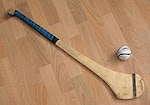
Irish families like to go "for a drive" on a Sunday afternoon. Usually, the yparked the car by the lake or a beauty spot, mother got out and entertained the children while father would sit behind the wheel and listen to hurling and Gaelic football results. We found our house and what we were doing to it became a similar curiosity attraction in the second year. Regularly after lunch and thoughout the whole afternoon, a car would park outside our main entrance gate where one had a good look over the gardens and back of the house. They pointed at things. It became quite intrusive. Waving at the nosey-parkers didn't deter them. That gate provided a spot to pull in the car without becoming a traffic obstacle whereas the yard gate didn't offer that. And it might have been just of equal interest to them. So we decided to block that gate and view by planting fast growing bushes, my favorite laurels, and only have a little hand gate to get access at an angle where they couldn't peep in.
Mac and a strapping farm hand took out some of the concrete pathway with a jackhammer. Now the soil was ours, Pauline's and mine, to dig and plant. We went about 3 ft deep and 6 yards wide, shoveling the earth until every bone in our bodies hurt. I remember just having over 50 wheelbarrows full of soil which was wheeled around the house onto the compost heap or filled in other places where needed in the garden. Pauline never objected to any kind of work, however hard it was. Hard work had been her life after all. My tea brakes with her and friendship more than compensated for the hardship of all the jobs like plucking chickens, cleaning ashes out of fireplaces, washing floorboards, windows, than anything. I still see us in front of me after filling the last wheelbarrow, planting ca. 20 laurels into the ground. Pauline wiped her brow and said,"We women could run the country."
Irish families like to go "for a drive" on a Sunday afternoon. Usually, the yparked the car by the lake or a beauty spot, mother got out and entertained the children while father would sit behind the wheel and listen to hurling and Gaelic football results. We found our house and what we were doing to it became a similar curiosity attraction in the second year. Regularly after lunch and thoughout the whole afternoon, a car would park outside our main entrance gate where one had a good look over the gardens and back of the house. They pointed at things. It became quite intrusive. Waving at the nosey-parkers didn't deter them. That gate provided a spot to pull in the car without becoming a traffic obstacle whereas the yard gate didn't offer that. And it might have been just of equal interest to them. So we decided to block that gate and view by planting fast growing bushes, my favorite laurels, and only have a little hand gate to get access at an angle where they couldn't peep in.
Mac and a strapping farm hand took out some of the concrete pathway with a jackhammer. Now the soil was ours, Pauline's and mine, to dig and plant. We went about 3 ft deep and 6 yards wide, shoveling the earth until every bone in our bodies hurt. I remember just having over 50 wheelbarrows full of soil which was wheeled around the house onto the compost heap or filled in other places where needed in the garden. Pauline never objected to any kind of work, however hard it was. Hard work had been her life after all. My tea brakes with her and friendship more than compensated for the hardship of all the jobs like plucking chickens, cleaning ashes out of fireplaces, washing floorboards, windows, than anything. I still see us in front of me after filling the last wheelbarrow, planting ca. 20 laurels into the ground. Pauline wiped her brow and said,"We women could run the country."
Thursday, May 5, 2011
Got soil?
This week is Compost Awareness Week. Did you know? What does it matter? With all the hype around certain political events we easily forget the most elementary basics of life that surround us: our food and how it is grown, the soil it takes to grow it (or rather what we do to it) and water. An excellent article on this caught my eye this morning. See on the right. I've been struggling to get my compost heap going here in FL. Whereas it never was a problem in a colder and wetter climate, in the dryness of a Florida winter and the scorching sun that we had since March it was almost impossible. By wrapping plastic foil around the container and watering it regularly, the necessary wanted micro-climate is starting to develop eventually. I had even carried worms over from other parts of the garden by hand and given them a new home, speaking to do them encouragingly to go to work.
Saturday, March 26, 2011
Eerily Familiar
It's been 2 weeks now since disaster struck Japan. Every day, American news media report in their typical over the top sensational manner about what might happen, could have happened...and do we really know what happened? Is nuclear technology any safer now than 25 years ago. How can it ever be?
The beginning of my blog www.Ioncehadafarminireland.blogspot.com takes me right back and is eerily familiar:
"It was the environmental disaster of Chernobyl in 1986, and the overall nuclear threat that motivated us enough to opt out of the rat race and start afresh in Ireland. After Chernobyl, in Germany fall out levels were dangerously high. The government discouraged people to feed milk to their children, not to eat fresh vegetables --and this was early summer- and our new Geiger counter measured excessive radiation levels in our children’s sandbox. Ireland had escaped almost unscathed due to the prevailing weather pattern in the 2 weeks after the disaster in Ukraine."
Radiation was measured yesterday in Hawaii, the West coast, even in Colorado. Depending on prevailing weather patterns - that merry-go-round of thermodynamics and the big unknown that weathermen never seem to get right- the whole world might be in for a few u-turns and imponderables, unforeseeables, and God forbid the unexpected. Imports from Japan have been banned widely. But what do the poor Japanese do?
After Chernobyl,we went to a country that was minimally affected to grow our own healthy food. Twenty-five years later, a massive new scare. BTW, do you know the half-life of Plutonium or Cesium? Surprise, surprise, remnants are still lingering in Ukraine. Regions unfit to live in for thousands of years--except for those unfortunate who cannot leave the area and have to stay put. They still suffer the horrible consequences. European Journal, a show broadcast from Germany on PBS -thank God for public radio and TV- reported about big nuclear accident before Chernobyl, an event even I had never heard about: MAYAK, 50 years ago. Guess what: People there and their children and children's children are still exposed to the radiation caused then and suffer from horrific congenital diseases. Because the half-life of Plutonium 239 is 24,000 years! Geiger counters still go crazy in that area. If the Mayak area has a hot summer again, people will swim in the Techa River yet again and soak it right in.
So what can a single person do who wants to let his species survive? Or an organic farmer? "Even if I knew the world came to an end tomorrow, I would still plant an apple tree today." (Martin Luther)
The beginning of my blog www.Ioncehadafarminireland.blogspot.com takes me right back and is eerily familiar:
"It was the environmental disaster of Chernobyl in 1986, and the overall nuclear threat that motivated us enough to opt out of the rat race and start afresh in Ireland. After Chernobyl, in Germany fall out levels were dangerously high. The government discouraged people to feed milk to their children, not to eat fresh vegetables --and this was early summer- and our new Geiger counter measured excessive radiation levels in our children’s sandbox. Ireland had escaped almost unscathed due to the prevailing weather pattern in the 2 weeks after the disaster in Ukraine."
Radiation was measured yesterday in Hawaii, the West coast, even in Colorado. Depending on prevailing weather patterns - that merry-go-round of thermodynamics and the big unknown that weathermen never seem to get right- the whole world might be in for a few u-turns and imponderables, unforeseeables, and God forbid the unexpected. Imports from Japan have been banned widely. But what do the poor Japanese do?
After Chernobyl,we went to a country that was minimally affected to grow our own healthy food. Twenty-five years later, a massive new scare. BTW, do you know the half-life of Plutonium or Cesium? Surprise, surprise, remnants are still lingering in Ukraine. Regions unfit to live in for thousands of years--except for those unfortunate who cannot leave the area and have to stay put. They still suffer the horrible consequences. European Journal, a show broadcast from Germany on PBS -thank God for public radio and TV- reported about big nuclear accident before Chernobyl, an event even I had never heard about: MAYAK, 50 years ago. Guess what: People there and their children and children's children are still exposed to the radiation caused then and suffer from horrific congenital diseases. Because the half-life of Plutonium 239 is 24,000 years! Geiger counters still go crazy in that area. If the Mayak area has a hot summer again, people will swim in the Techa River yet again and soak it right in.
So what can a single person do who wants to let his species survive? Or an organic farmer? "Even if I knew the world came to an end tomorrow, I would still plant an apple tree today." (Martin Luther)
Thursday, March 17, 2011
Happy St. Patricks Day
Even if you don't dye rivers green in Ireland- you might just be painting the town red- happy Paddy's day on both sides of the Atlantic. Seize the Day! Nil Se'n La! Wishing you lots of luck!
The world needs it and can do with it big time. All our joint organic efforts may become null when our environment ceases to exist the way we know it. It reminds me of our Chernobyl experience that I describe at the beginning of this blog www.Ioncehadafarminireland.blogspot.com. It was the reason for us to take our family to a safer country. But where is safe, ultimately.
Here is the link to the well-informed article of a German scientist friend, Stefan Thiesen, (earth and sea)
http://www.opednews.com/articles/Michio-Kaku--We-live-in-a-by-Stefan-Thiesen-110317-693.html. We all live in a bubble. Think about it!
Or go to the Celtic Women and enjoy their music: http://www.somemusicecards.com/celtic-woman/share/?ec=a6e77217d803b881f2b6ee3d316f5869
Beannachtam na Feile Padraig! May you be poor in misfortune, and rich in blessings, slow to make enemies and quick to make friends. And may you know nothing but happiness from this from this day to life's end. Sl'n agus beannach!
The world needs it and can do with it big time. All our joint organic efforts may become null when our environment ceases to exist the way we know it. It reminds me of our Chernobyl experience that I describe at the beginning of this blog www.Ioncehadafarminireland.blogspot.com. It was the reason for us to take our family to a safer country. But where is safe, ultimately.
Here is the link to the well-informed article of a German scientist friend, Stefan Thiesen, (earth and sea)
http://www.opednews.com/articles/Michio-Kaku--We-live-in-a-by-Stefan-Thiesen-110317-693.html. We all live in a bubble. Think about it!
Or go to the Celtic Women and enjoy their music: http://www.somemusicecards.com/celtic-woman/share/?ec=a6e77217d803b881f2b6ee3d316f5869
Beannachtam na Feile Padraig! May you be poor in misfortune, and rich in blessings, slow to make enemies and quick to make friends. And may you know nothing but happiness from this from this day to life's end. Sl'n agus beannach!
Tuesday, March 15, 2011
A typical day
Get up at 6 a.m. Make breakfast. Let out the geese and chickens as soon as the sun is out. Wake children. Grind wheat into flower in the pantry. 1kg takes about 45 minutes. Have breakfast. Start baking bread or cake while children get dressed and pack their bags. Prepare lunch boxes. Let bread rise and put in the hot AGA for an hour. (Mac would take it out when finished; usually during 'elevenses'- his coffee break in the morning).Mac would go out and check on animals if there were any in the stables. Together with the children, he would feed horses and muck out. Children feed dogs and cats. I shower and get dressed. Pack my books and get ready, equipped with shopping list. Get kids in the car. In the first years, drive kids to local school, later to the one in Limerick (45 min). Go to work: teach a few hours at the University while Mac ran the farm; pick up children, grab some groceries with tired children in the car. Time for coffee and cake break while kids do their homework. Mac would go to do his errands as car was back or all three would exercise the horses and I cook dinner. Prepare classes for next day or do some gardening. Then the stables had to be mucked out again, animals fed and put to bed. Time for a book or paper. Then crash exhausted.
Wednesday, March 2, 2011
Never a dull moment
Early in the year, Mac revealed that he wanted to take over more of the acres which so far had been rented out to two neighbors. "What for?" "More sheep, some cattle, and then we need grass for them, of course. Grazing ground". Instead of self-sufficiency, which had been our only goal so far, he had decided to extend his farming and husbandry activities. I had been quite contented with the extent of our gardening activities , i.e. grow our own and maybe sell some surplus. But being the economist that he was, Mac was hatching plans in his head of how to make the enterprise commercially viable. We were a long away from it, however. I had learned the term "gentleman farming" and it had appealed to me. The rent from the land secured a steady income and left time for what we originally had also planned, i.e., playing golf,fishing or go sailing occasionally. With 20 new ewes and ca. the same amount of young heifers the chances of that seemed to dwindle.
In the meantime, before more sowing and planting could be done because of inclement weather, these new fields had to be prepared: The removal of weeds, (with the tractor or manually of course the old fashioned way without Roundup); fertilizing the land with manure and overall a fair amount of fencing needed to be done. Winter time is the preferred time for fencing, unless there is an urgent necessity. Then fencing always takes priority over other things, particularly plans one had been looking for. The Farmers' Journal was the source for finding livestock unless the neighbor knew somebody who wanted to sell certain things we were looking for. Also the place to advertise hay or the AGA (see previous stories).
A farmer must have coined the saying which became our mantra: never a dull moment. But for Mac it was all play, his hobby. He loved every minute of it.
In the meantime, before more sowing and planting could be done because of inclement weather, these new fields had to be prepared: The removal of weeds, (with the tractor or manually of course the old fashioned way without Roundup); fertilizing the land with manure and overall a fair amount of fencing needed to be done. Winter time is the preferred time for fencing, unless there is an urgent necessity. Then fencing always takes priority over other things, particularly plans one had been looking for. The Farmers' Journal was the source for finding livestock unless the neighbor knew somebody who wanted to sell certain things we were looking for. Also the place to advertise hay or the AGA (see previous stories).
A farmer must have coined the saying which became our mantra: never a dull moment. But for Mac it was all play, his hobby. He loved every minute of it.
Subscribe to:
Posts (Atom)